


 Jimmy Tan
In the heart of Kampung Sungai Kayu Ara, a once-modest community garden is entering a decisive new phase that reflects both growing ambition and deepening community trust. Under the leadership of Ketua Kampung Kayu Ara, Tok Haji Ramli, the Kebun Komuniti MADANI project has expanded into a structured, high-output urban farming initiative aimed at strengthening food security while nurturing social cohesion.
Now in its third phase, the project is undergoing a significant scale-up in both production capacity and infrastructure. Nearly 1,000 polybags are being prepared to support high-demand crops that can be quickly brought to market, ensuring the garden remains productive and relevant to local needs. According to Tok Haji Ramli, the current focus is on preparation and replanting, with careful attention given to ensuring that irrigation drippers and supporting systems are fully operational before seeds are introduced.
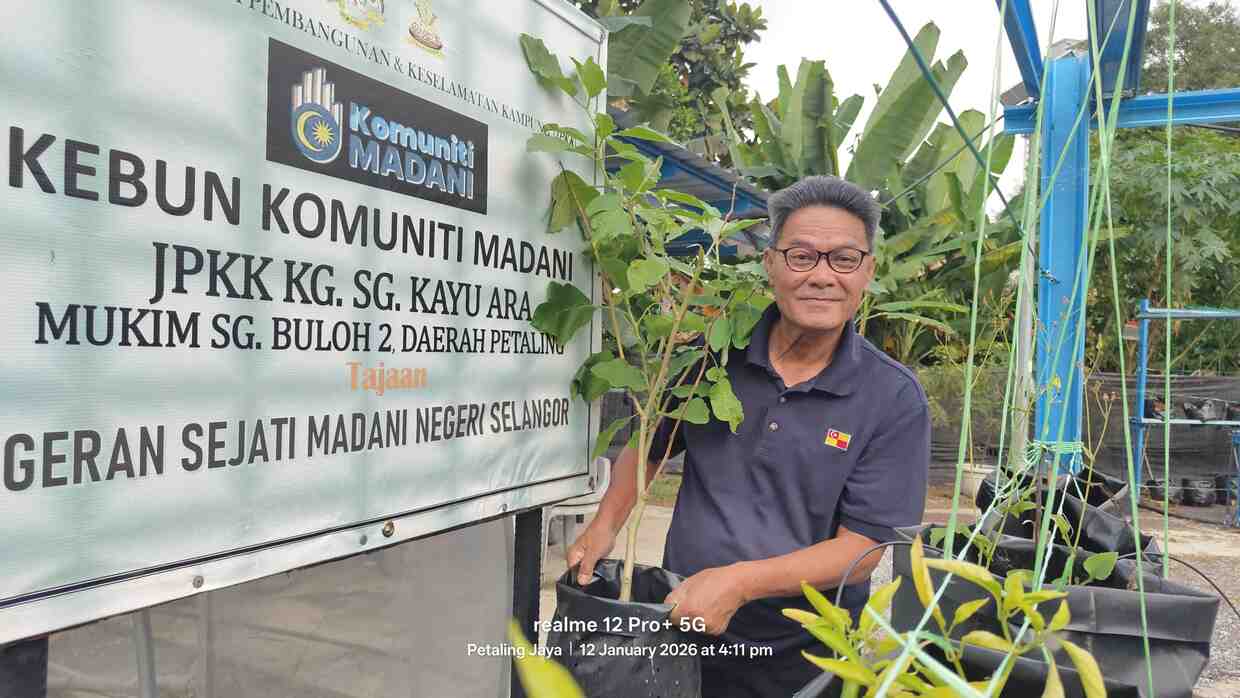
The crops selected for this planting cycle — brinjals, fertigation chilies, cucumbers and long beans — reflect both market demand and the community’s familiarity with the produce. Once planting is finalised, the vegetables are expected to be ready within one to two months, offering a rapid turnaround that benefits both participating residents and nearby consumers.
Twin greenhouses support sustainable
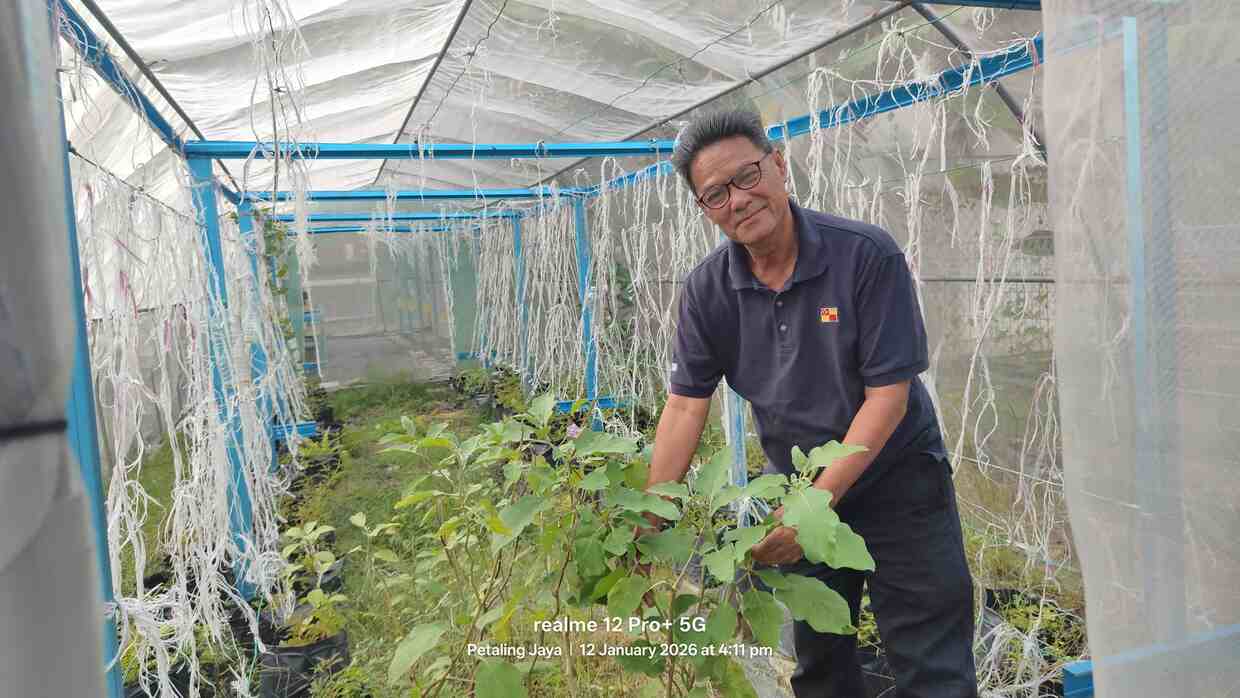
Supporting the expanded production is a pair of purpose-built greenhouses designed to optimise growth at different stages of cultivation. The first, a dedicated plant nursery or tapak semaian, provides a controlled environment for seedlings such as chilies, brinjals and cucumbers, shielding young plants from harsh weather and pests during their most vulnerable stage.
The second structure, referred to as the crop house, is used for mature plants and hydroponic systems. Here, the emphasis is on pesticide-free farming, aligning with growing public demand for cleaner, healthier produce. Tok Haji Ramli noted that vegetables grown in this space are intended not only for Kampung Kayu Ara residents but also for the wider Bandar Utama area, positioning the community garden as a small but meaningful contributor to urban food supply.
Together, the twin greenhouses reflect a thoughtful approach to sustainability, blending traditional soil-based methods with modern hydroponic techniques to maximise yield while minimising environmental impact.
A garden that grows people together
While the vegetables may be the most visible outcome, Tok Haji Ramli is clear that the garden’s greatest success lies in the people it brings together. The Kebun Komuniti MADANI is a multiracial effort, with Malay, Chinese and Indian residents working side-by-side, united by shared responsibility rather than obligation.
“I don’t believe in forcing anyone,” Tok Haji Ramli explained. “If you have the time and the heart to do it, you are welcome. We just keep moving forward.”
This open-door philosophy has helped sustain participation over the years, allowing the project to grow organically alongside the community it serves. Strategically located near the Kompleks Balai Penghulu and adjacent to the local police station, the garden also benefits from a secure environment, giving residents peace of mind as they take part in daily gardening activities.
As Phase 3 gains momentum, the Kebun Komuniti MADANI stands as a practical example of how grassroots leadership, inclusive participation and thoughtful planning can transform a shared space into a living symbol of unity and resilience. In Kampung Sungai Kayu Ara, the act of growing food has become inseparable from the act of growing together.

 Yalinie Mathan
 C. Khor




Add comment