


 Admin
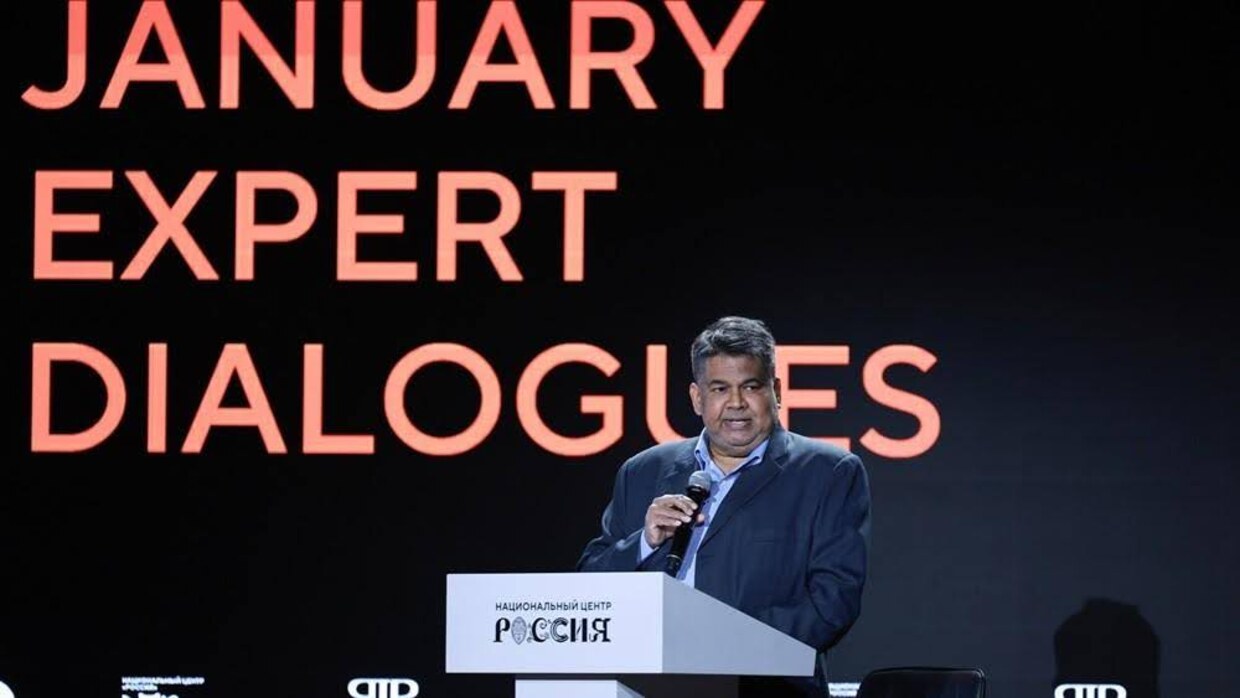
AdminIn a multipolar world, technological leadership will not belong to importers of ready-made solutions. The future lies with countries and organisations capable of developing and implementing their own standards and systems. This was stated by Dr Rais Hussin, Chief Executive Officer of EMIR Research, during the January Expert Dialogues at the National Centre RUSSIA on 30 January. The expert addressed one of the megatrends shaping the economy of the future — “Platformisation of the Global Economy and a New Level of Autonomy”.
The Struggle for Platform Ownership
“The next stage of global competition is not a struggle between markets and states, nor between capitalism and its alternatives. It is a struggle over who designs, owns and governs the platforms that capture value, coordinate activity and make decisions at a systemic scale,” said Dr Rais Hussin.
He proposed a new perspective on the concept of sovereignty. While the industrial era was based on territory and labour force, Dr. Rais argued that today “architectural sovereignty” is emerging. This is defined as the ability of a society to design its own infrastructural, technological, and cognitive platforms, which ensure value creation and decision-making in governance.
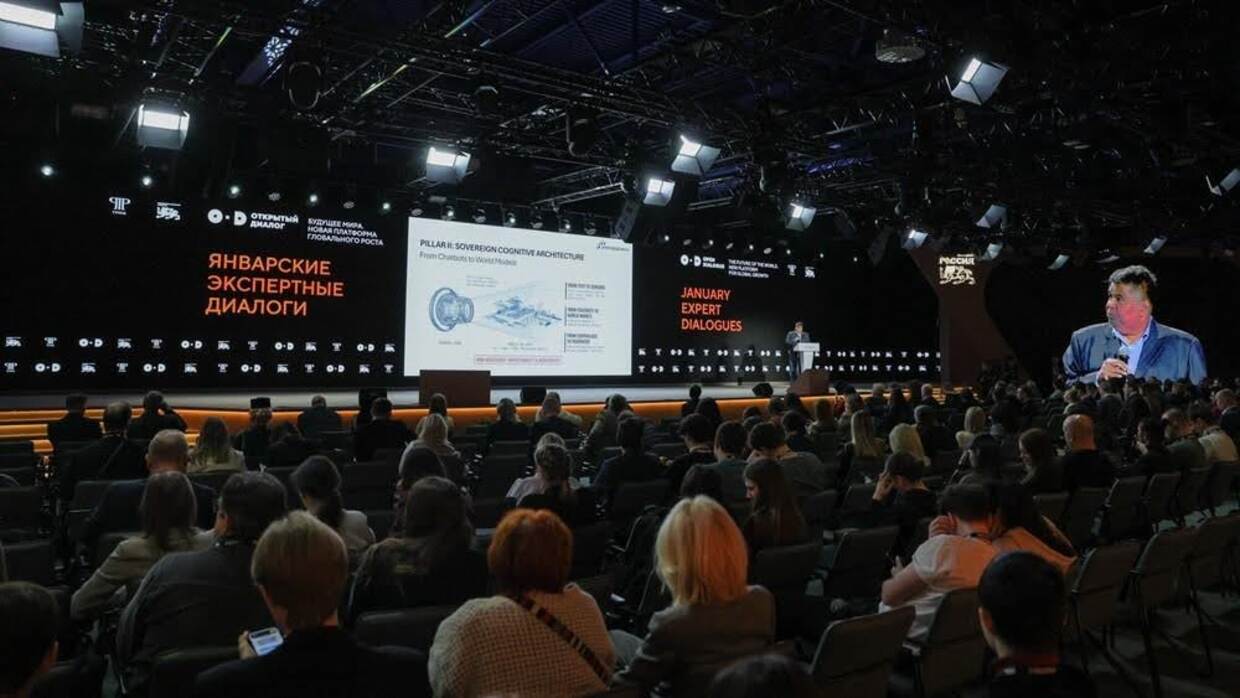
“We are not taking part in a GPU arms race,” Dr. Rais stated, emphasizing that the key factor is not hardware alone, but solution architecture and data quality.
He noted that national and corporate platforms must be capable of auditing external AI systems, understanding the data on which they are trained and the decisions they produce. Without this, digital sovereignty is impossible.
A Three-Layer Structure
At the core of Dr Rais Hussin’s presentation was a “three-layer” structure of the new platform economy. Financial architecture determines how value is created and redistributed.
Cognitive infrastructure encompasses education, data processing and artificial intelligence. Strategic governance sets the rules, formats of cooperation and institutions that turn technologies into sustainable growth.
“This triad forms the framework necessary to create a new global growth platform, in which countries cease to be passive users of other people’s standards and become the authors of their own configurations,” Rais Hussin emphasised.
Architects, not claimants
During his lecture, the strategist also addressed the challenges of workforce training. In a world increasingly driven by complex technological systems, he highlighted the need for talent “capable not only of using ready-made models, but also of understanding their internal logic, asking the right questions and designing new solutions.”
This requirement applies equally to engineers in fields like genomics and quantum technologies, and to managers responsible for shaping national strategies.
“We are not claimants. We are architects. The new platform will not be granted — it must be built,” Dr. Rais told the participants.
He noted that while globalisation will remain, its nature is shifting from monopolar models to a multipolar configuration, where regional centres of power will see their platform ecosystems grow in influence. He added that the Open Dialogue format serves as a “prototype platform” for developing these new rules of interaction.
The event, titled “The Future of the World. A New Platform for Global Growth,” was held for the first time on January 30. The lead speaker of the event was Maxim Oreshkin, Deputy Chief of Staff of the Presidential Executive Office of the Russian Federation.


 Sashidaran Gunathevan




Add comment