


 Marcel Simok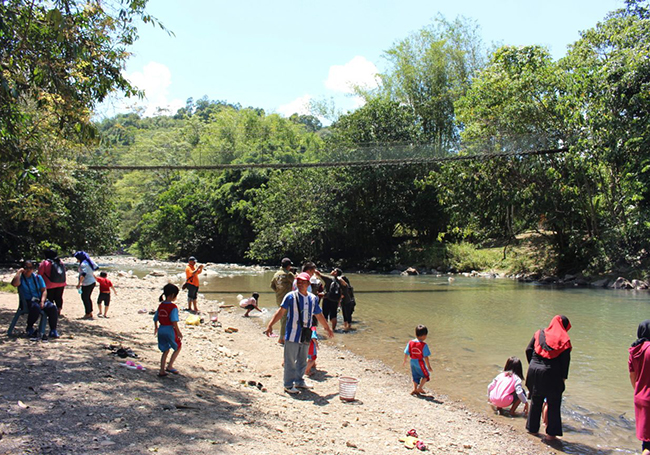
In 1986, a Dusun community in Melangkap did something that sounds backwards. They stopped fishing their own river — on purpose, under a practice now known as the Tagal system.
That decision, repeated across nearly 400 rivers today, is now Sabah’s answer to two problems most states are still struggling with: dying rivers and rural poverty.
The Tagal system means “prohibition” in the Dusun language. It bans fishing in a river for an agreed period, letting fish stocks and water quality recover before controlled access resumes. What started as one village’s rule is now reshaping how Malaysia thinks about conservation and rural income together.
What Tagal actually does to a river
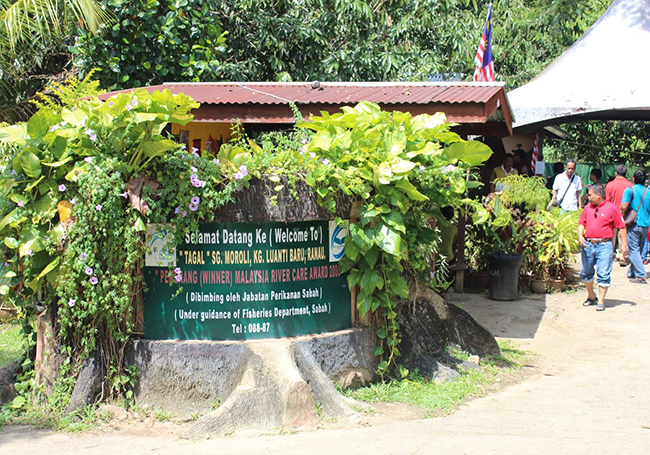
Fisheries officer Jephrin Wong formalised the modern Tagal model in 2002, building on a much older indigenous practice called bombon. In 2004, his team introduced a three-zone system: red zones for strict conservation, yellow for seasonal regulated fishing, and green for year-round sustainable use.
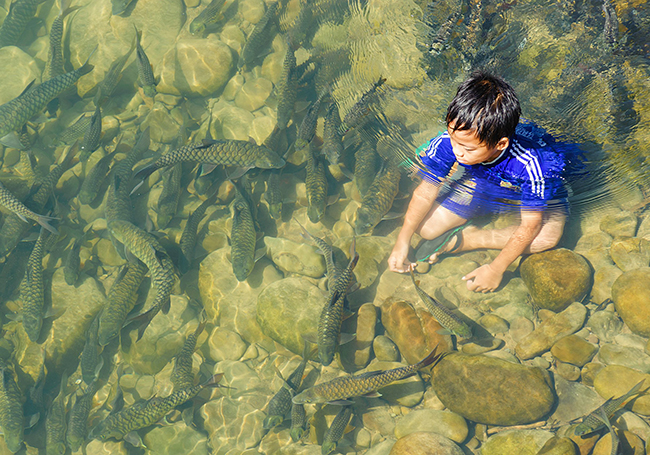
The results came fast. At Babagon, the endangered mahseer population rebounded so strongly that researchers found the fish had grown tame enough to recognise people. That single discovery changed everything about what Tagal could become.
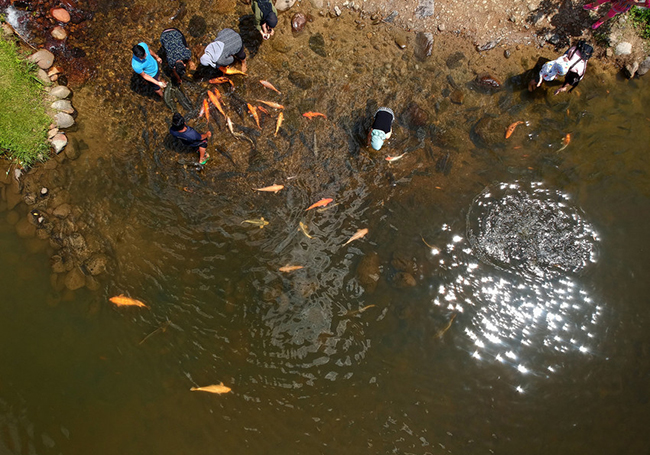
By 2006, Tagal Luanti in Ranau had turned that tameness into tourism. Visitors could touch and feed the fish — a “fish massage” experience now drawing thousands of tourists a year. The river protected itself, and the village got paid for it.
The model spread fast after that. Sarawak adopted a version called Tagang in 2005. Pahang followed in 2007. By 2009, Tagal had even expanded into marine conservation, protecting artificial reefs and sea cucumber habitats along the coast.
The honest economics of conservation tourism
In Ulu Kimanis, Papar, conservationist Ambrose Lajumin built a Tagal sanctuary along the river near Kampung Toboon — work CJ.MY first reported on in 2022. His goal was simple: protect the river, and let the surrounding community benefit from doing so.
The income picture, though, is more modest than the tourism brochures suggest. A 2024 study across 15 ecotourism-linked Tagal sites found that 87.3% of participating families depend “little” on Tagal income relative to their total household earnings. Conservation tourism supplements livelihoods. It rarely replaces them.
That nuance matters. Tagal was never designed purely as an income engine — it was a river recovery method that happened to create economic side benefits. Treating it as a guaranteed cash crop risks disappointing communities and undermining the conservation goal that made it work in the first place.
What it does deliver reliably is something harder to put a ringgit figure on: a generation of villagers with a direct stake in keeping their river clean. When your income, however small, depends on visible fish, you stop dumping waste upstream.
Why the rest of Malaysia still needs this
Nationally, the river picture is not improving. The number of rivers classified as clean dropped to 468 at the end of 2025, down from 486 the year before. Rivers in the “slightly polluted” category rose for the second straight year, driven by agriculture, livestock farming, and untreated wastewater from wet markets and restaurants.
Rivers like the Klang, Juru and Skudai remain among the most degraded in the country, carrying decades of industrial and urban runoff. Out of 98% of Malaysia’s drinking water sourced from rivers, that pollution is not an abstract environmental statistic. It is a direct threat to the water coming out of household taps.
The flood connection compounds the problem. Research on Peninsular Malaysia found that converting forest to oil palm and rubber significantly increased the number of days flooded during heavy rain. The November 2025 floods displaced over 10,000 people across seven states, with Kelantan alone reporting more than 8,200 evacuees — a disaster experts linked directly to deforestation and clogged drainage upstream.
Tagal will not fix Malaysia’s rivers on its own. But it offers something the country’s current flood and pollution response largely lacks: a model where the people closest to the river have a genuine reason to protect it, not just regulators issuing fines after the damage is done.


 Admin
Admin
 Lee-Jean Fung






Add comment