


 C. Khor
China will offer 5,000 AI training places to developing countries over five years. Chinese Consul-General in Penang Zhou Youbin said so at a forum in Penang recently. He said the China AI training places aim to narrow the AI and digital divide.
Zhou also said China would set up AI application cooperation centres. These would be with Asean, the African Union and other key Global South members. He spoke at the Asean-China AI and Emerging Industry Cooperation and Business Matchmaking Forum. It was held at the Penang Waterfront Convention Centre.
The forum was held alongside AI Horizon 2026. That event brings together technology companies, industry players, researchers and educators. Zhou said the initiatives reflected China’s commitment to sharing the benefits of technological development.
Why China says it is offering AI training
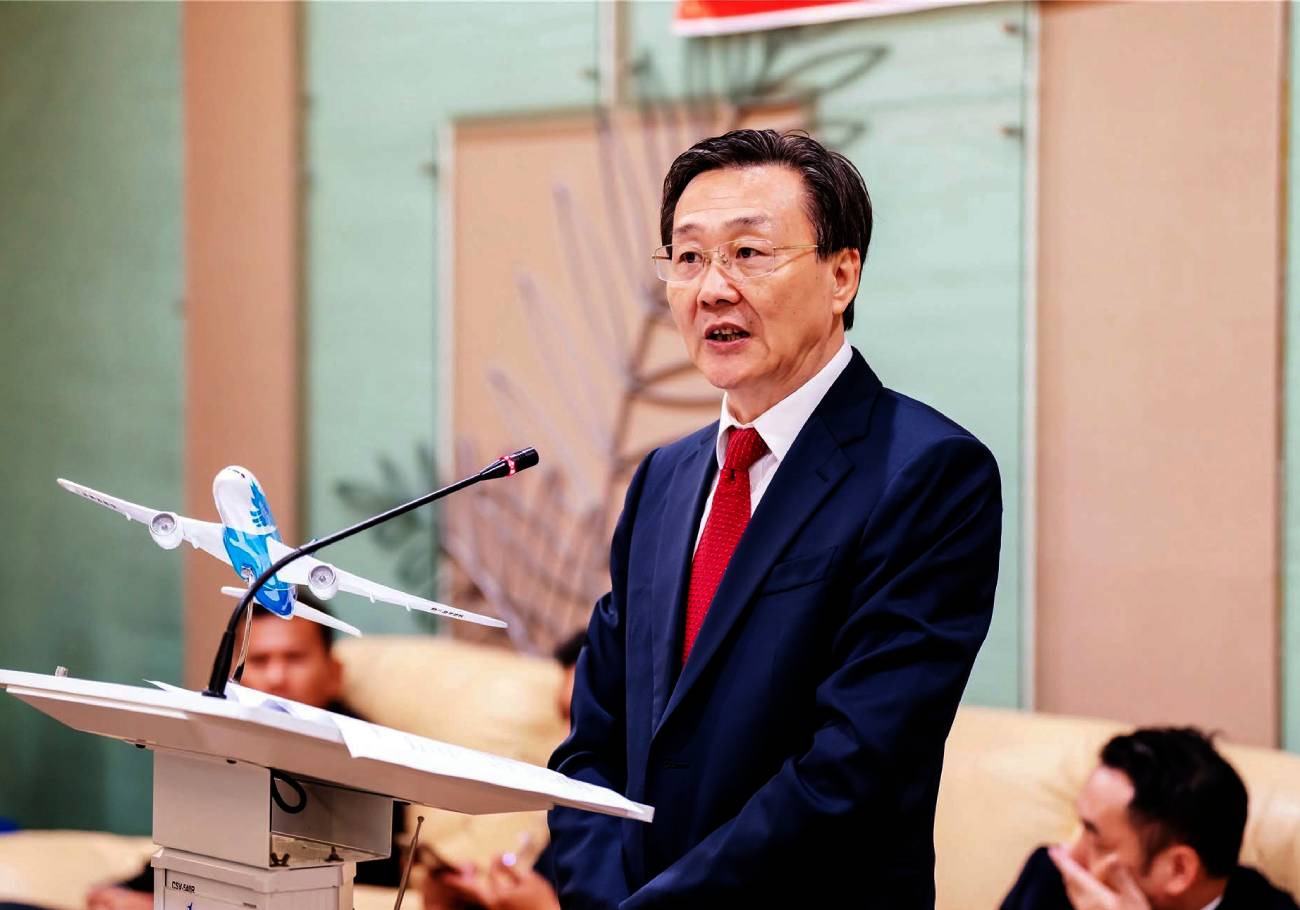
Zhou said China wanted AI to serve development. He added that China had always upheld “extensive consultation, joint contribution and shared benefits”. He said this was how it shares the benefits of technological progress.
Zhou said China and Malaysia were moving in the same direction on AI. He pointed to Malaysia’s National AI Action Plan 2026–2030, launched this year. He said it also stresses innovation-driven development, safe and trusted governance, and inclusive access to AI.
Zhou also highlighted Chinese President Xi Jinping’s Global AI Governance Initiative, launched in 2023. In addition, he cited Xi’s four proposals on AI development, security, civilisation and governance. Xi made them at the 2026 World AI Conference and High-Level Meeting on Global AI Governance.
Zhou said the proposals include open cooperation and AI that is secure and controllable. They also cover mutual learning among civilisations and better global AI governance. He said China stood ready to work with Malaysia and other Asean countries. The goal, he said, was to bring AI benefits to more households and communities.
Examples abroad and the Malaysian angle

Zhou then cited examples of Chinese AI technology used in developing countries. In Myanmar, he said, a multilingual translation system powered by a Chinese AI model had helped overcome language barriers. It also supported rescue operations after an earthquake.
In Cambodia, Zhou said, Chinese experts had applied AI to smart aquaculture. The aim was to help local farmers improve production efficiency and raise their incomes.
In Thailand, he said, China’s “Yugong” smart mining operating system had opened up the possibility of mining with zero casualties. He added that it offered higher efficiency and lower emissions. These are Zhou’s descriptions, and CJ.MY has not verified them.
Zhou said the Penang consulate-general would keep acting as a bridge between China and Asean. He said it would support cooperation in AI and emerging industries. He added that this would help advance practical cooperation in northern Malaysia.
Separately, 35 Malaysian students left for China on 17 May. They joined the Malaysia-China Youth TVET Training 2.0 programme. They are training in AI and technical mechanical fields.
The programme is expected to send 500 Malaysian youths eventually, including for electric vehicles, robotics and automation. The reports did not say how many of the 5,000 China AI training places Malaysians might receive.

 Sashidaran Gunathevan
 Navin Kumar Perianen


Add comment