


 Marcel Simok
Dengue is rising fast in Malaysia. This time, a new virus strain is making the outbreak harder to predict.
As of 13 June 2026, Malaysia had recorded 33,367 dengue cases. That is a 20.7% increase compared to the same period in 2025. The death toll is more worrying. Dengue-related deaths rose by 43.75%, with 23 deaths recorded compared to 16 in 2025.
Health Minister Datuk Seri Dr Dzulkefly Ahmad announced the figures in Kota Kinabalu on 14 June. He was speaking at the national ASEAN Dengue Day celebration. His message was direct — no complacency, even if the numbers look manageable compared to neighbours.
Malaysia ranks third in ASEAN with highest incidence rate

Regionally, Malaysia ranks third in ASEAN behind Indonesia with 39,672 cases and Vietnam with 35,986. However, Malaysia’s incidence rate — cases per population — is the highest in the region.
A smaller population recording more cases per person means the virus is spreading more efficiently here. That is a serious distinction.
In Sabah alone, 2,866 dengue cases were recorded. That is a 50.4% increase compared to the same period last year. The worst-affected districts are Kota Kinabalu, Tawau, Sandakan, Penampang and Putatan.
The state’s tropical climate, rapid urban growth and dense residential pockets create ideal conditions for the Aedes mosquito to breed.
A new dengue strain is driving the surge

One of the most significant findings this year is a serotype shift. Lab surveillance found DENV-3 now dominates dengue infections in Malaysia. There are four dengue serotypes — DENV-1 through DENV-4.
Immunity from one does not protect against the others. When a less-common serotype becomes dominant, large portions of the population have little immunity to it.
DENV-3 last dominated Malaysia in the mid-1980s. That means an entire generation has never built immunity to it. That is why this outbreak is spreading fast.
Dzulkefly also flagged chikungunya as a parallel concern. Cases surged to 163 this year, up from just 30 in the same period last year. That is a 443% increase. Chikungunya is also spread by the Aedes mosquito. Both threats are rising at the same time.
Dengue: The government’s response
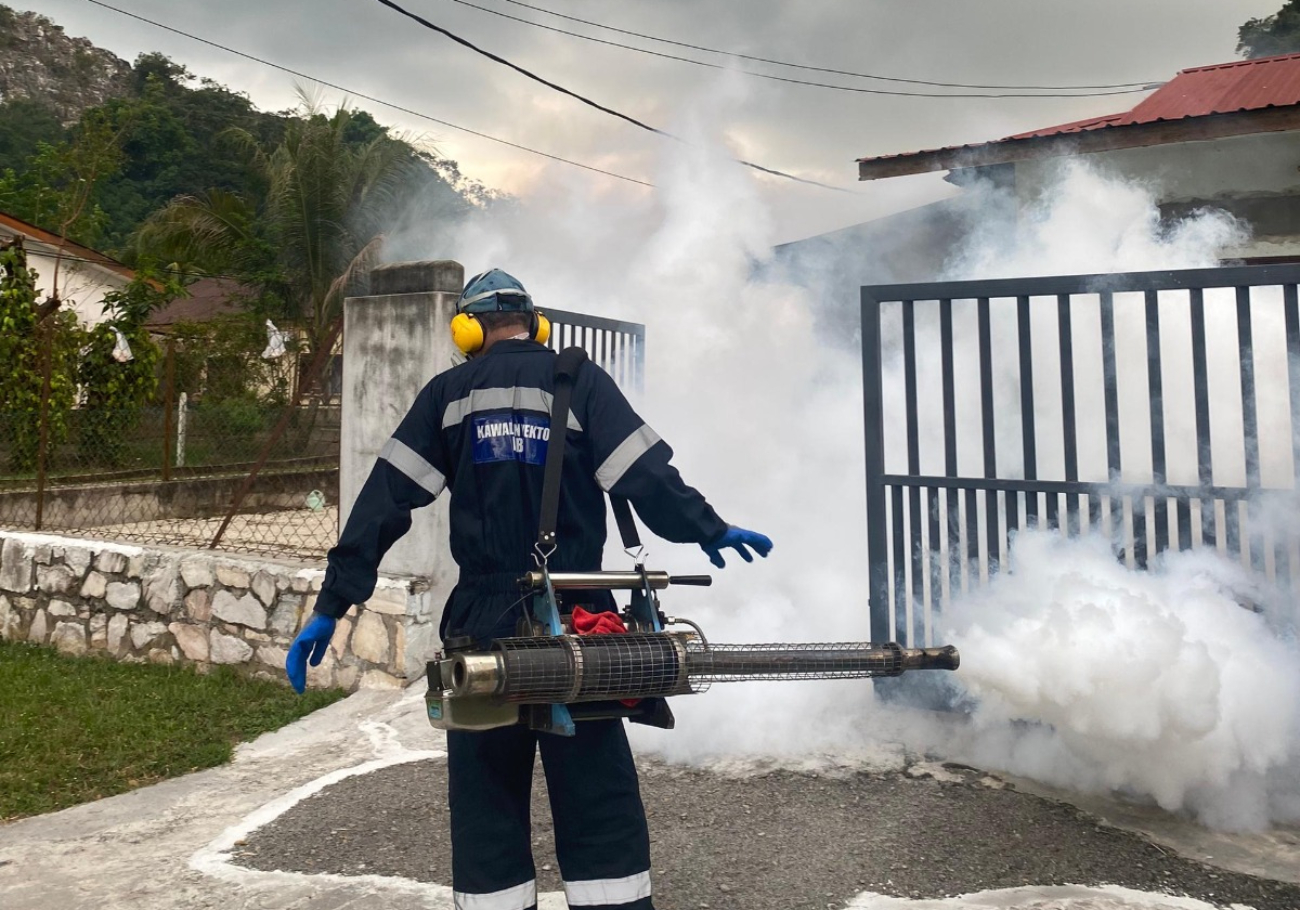
The Health Ministry is running the Komuniti Bebas Denggi programme. It is built around three pillars: environmental intervention, community empowerment and entomological surveillance.
A national gotong-royong in Manggatal, Kota Kinabalu on 14 June was part of that push. Communities were mobilised to clear breeding grounds in their neighbourhoods.
Dzulkefly stressed that most dengue infections are preventable. Communities just need to play a more active role in eliminating Aedes breeding spots near their homes.
Dengue has no specific treatment. Prevention is everything. The Aedes mosquito breeds in clean, stagnant water — not dirty drains. Check these spots around your home at least once a week:
- Flower pot trays and vases
- Roof gutters blocked with leaves
- Unused containers, pails and old tyres
- Water features and ponds without agitation
- Air-conditioner drip trays
Clearing stagnant water takes about ten minutes. It is still the most effective thing you can do. Report suspected dengue hotspots to your local council. Or call the MOH hotline at 1-800-88-1000.
Watch for these warning signs: sudden high fever, severe headache, pain behind the eyes, muscle pain or a rash. If any of these appear, see a doctor immediately.
Do not take aspirin or ibuprofen — both thin the blood and can worsen dengue complications. Use paracetamol instead. Stay hydrated.


 Maran Perianen
 C. Khor
 Yalinie Mathan






Add comment