


 Maran Perianen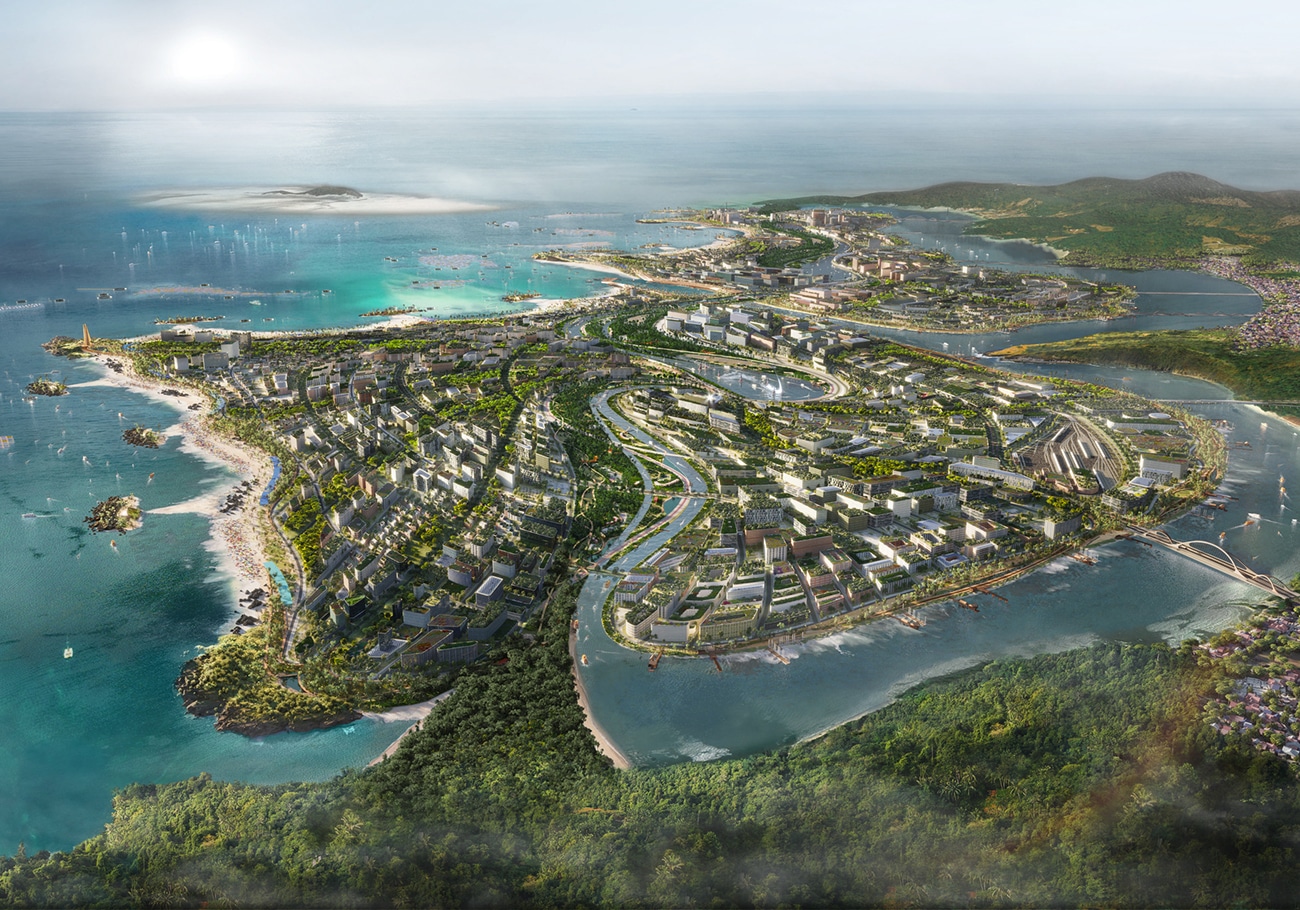
Something is rising from the sea off southern Penang. It is quiet from the shore. But it has divided fishermen, environmental groups and politicians for nearly a decade. And it is not done dividing them yet. Silicon Island.
It is Penang’s most ambitious — and most contested — infrastructure project. Here is the full story.
Why the sea became Penang’s ATM
The story does not begin with reclamation. It begins with a transport problem.
Penang’s Pakatan Harapan state government had long wanted a comprehensive public transport network — the Penang Transport Master Plan. But the federal government under Najib Razak refused to fund it. Penang had to find its own money.
The solution: reclaim land from the sea. The state would own the reclaimed islets and auction them off. Officials estimated the sale could raise RM70 billion — enough to cover the entire transport plan.
The sea became Penang’s ATM.
Silicon Island: From three islands to one
The original plan called for three islands covering 4,500 acres. An Environmental Impact Assessment went in during 2017 and came back rejected in 2018 — the Fisheries Impact Assessment was not good enough.
A revised EIA got conditional approval in 2019. But opposition persisted. In 2021, the DOE pulled that approval entirely.
After the 2022 federal election brought Anwar Ibrahim to power, federal regulators approved the project again in April 2023. The state then cut the project from three islands to one — a 49% reduction.
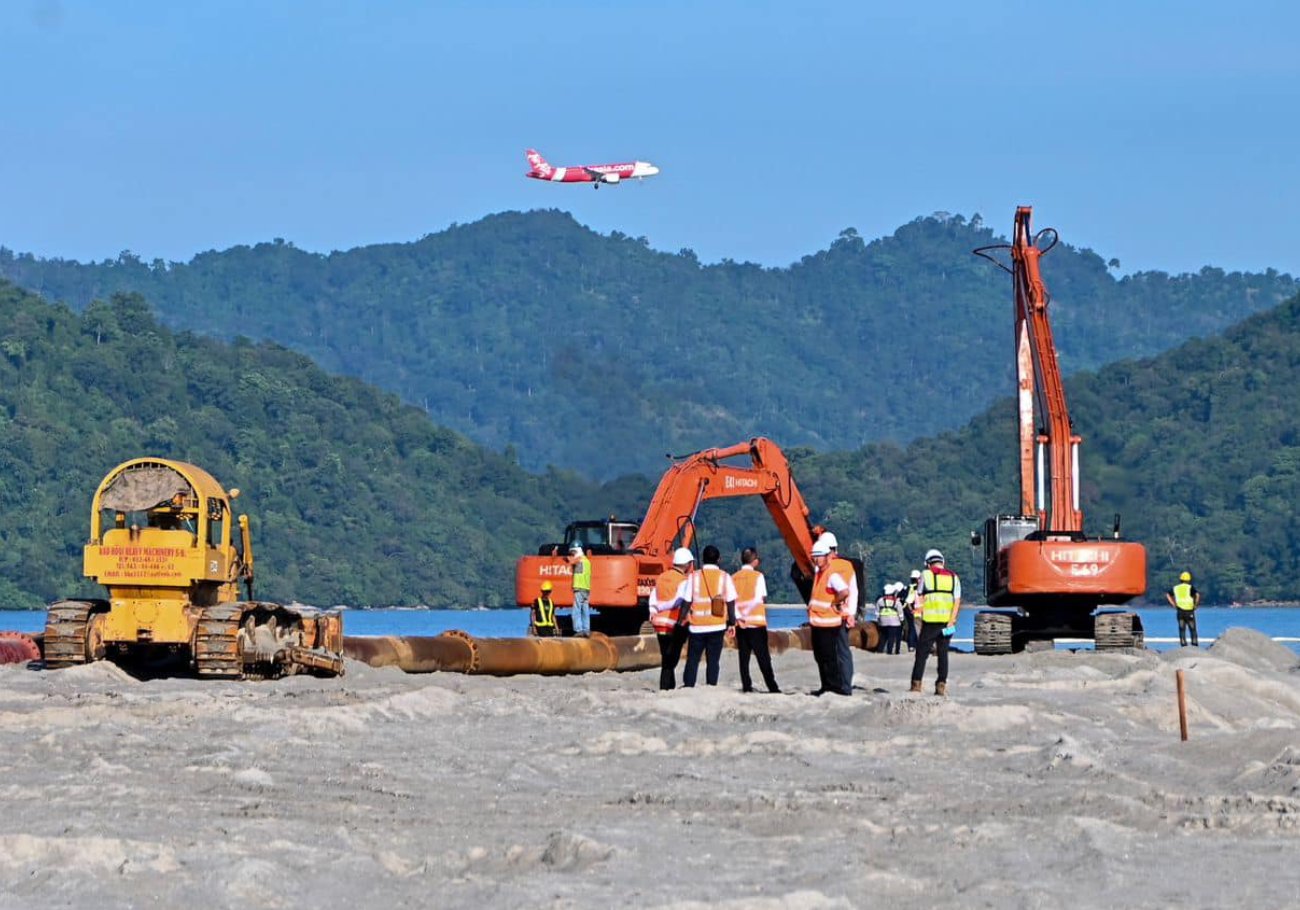
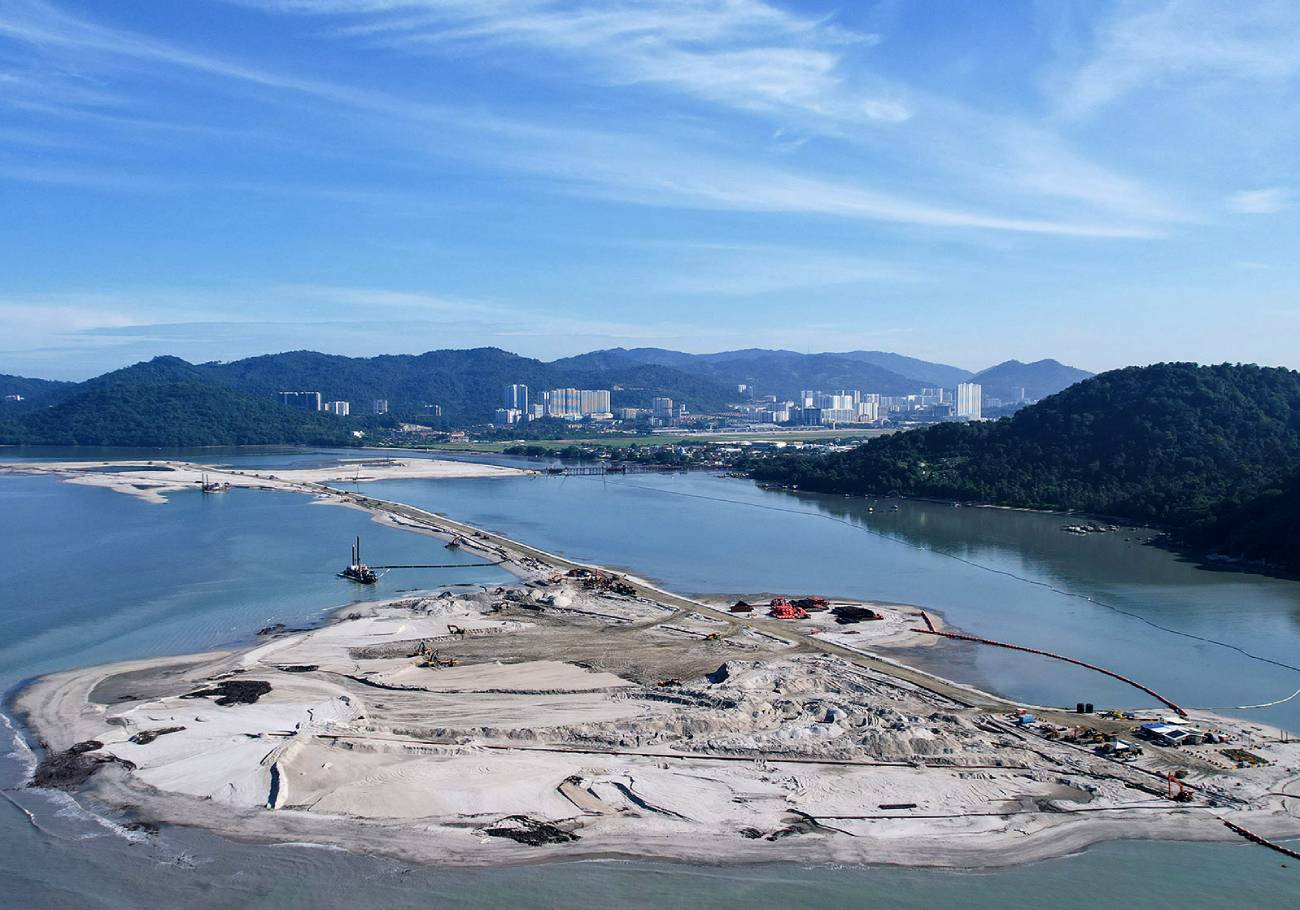
That single island became Silicon Island. Reclamation started in September 2023. Workers built the island to a minimum of 3 metres above sea level to handle high tides and storm surges.
What Is being built on Silicon Island
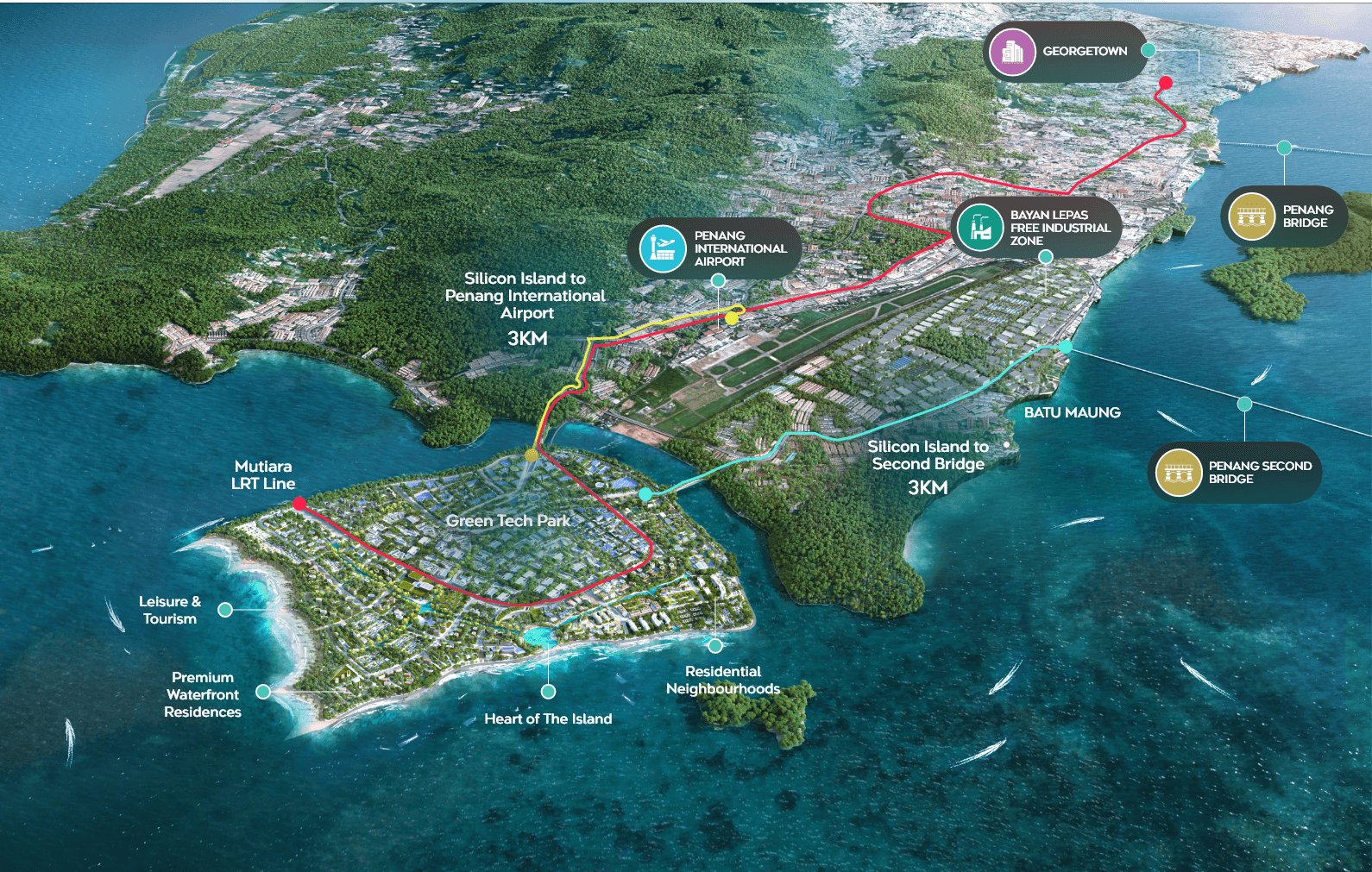
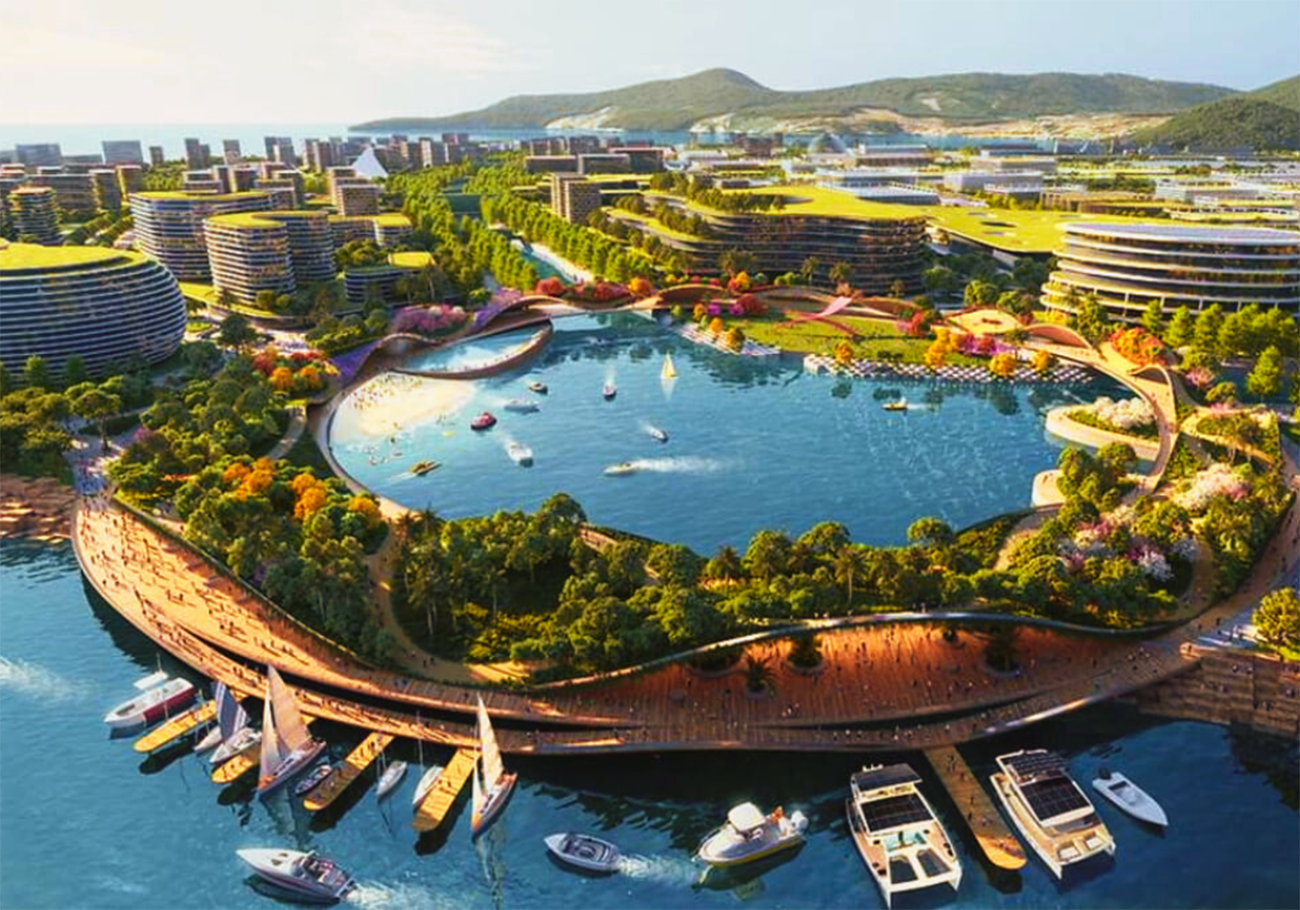
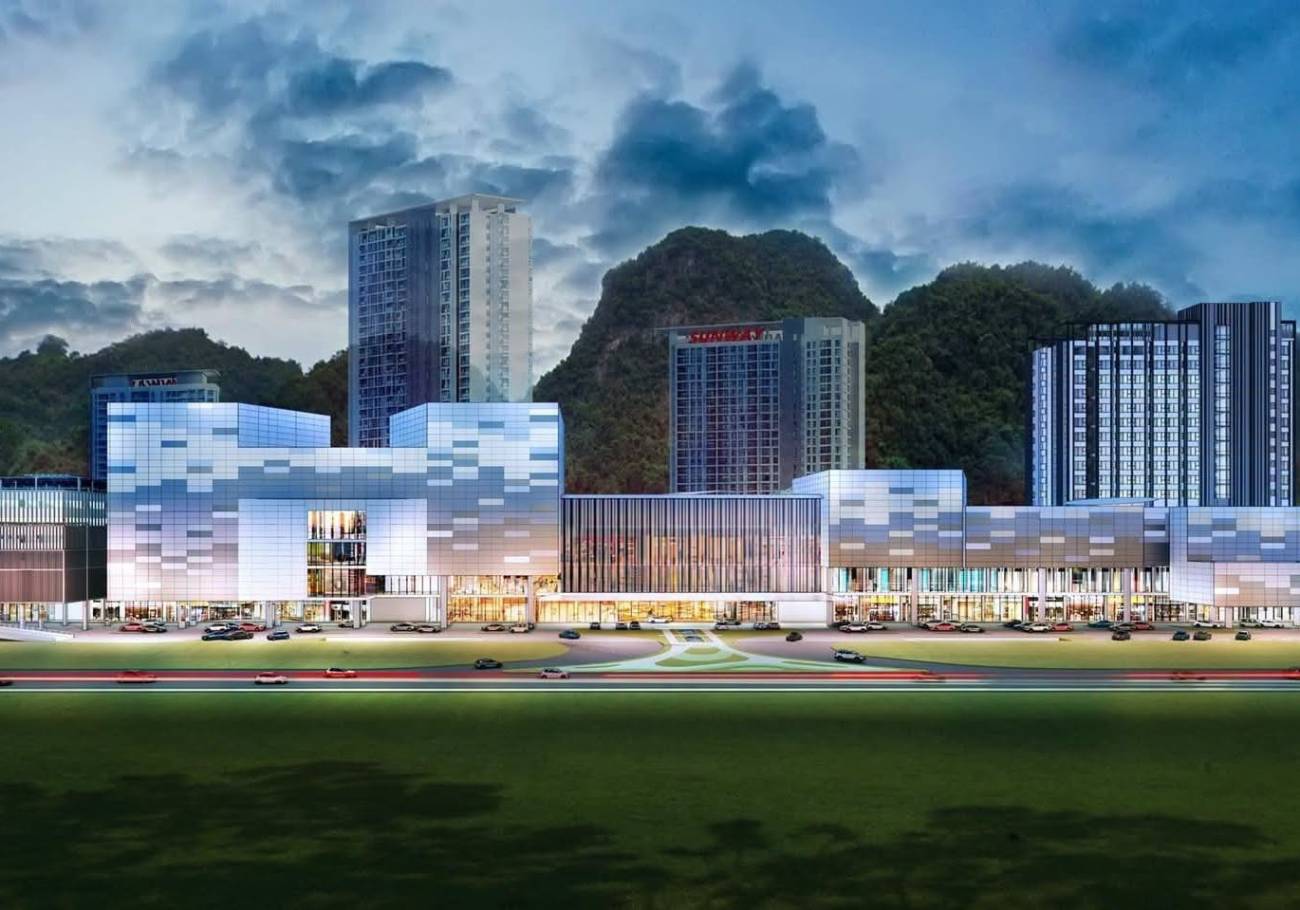
Silicon Island will cover 930.77 hectares when complete. Nearly half goes to industry and infrastructure. Industrial use takes 224.1 hectares. Infrastructure and utilities take 214.6 hectares. Housing gets 146 hectares. Mixed development and commercial use cover the rest.
A new Penang state administrative centre is also planned here, targeted for 2028. The plan includes a 70:30 shift in favour of public transport over private cars. It also targets a 45% cut in carbon emissions and full renewable energy use in the Green Tech Park.
The project promises to contribute RM1.1 trillion to GDP and create 220,000 jobs. Full reclamation targets 2032, with the full development running 25 years.
As of January 2026, workers had reclaimed 290 acres. Overall project progress stood at 2%. In May 2026, MRT Corporation took over the 27.7-hectare LRT depot site. That lets the Mutiara LRT construction begin without waiting for the full island.
The fishermen community divided
Not everyone accepted the deal.
Sungai Batu unit chief Zakaria Ismail led seven fishermen to court. They filed alongside Sahabat Alam Malaysia and Jaringan Ekologi dan Iklim in December 2023. Together they challenged the planning permission for the project.
The catch data told a painful story. Prawn catches in Q4 2022 ran at 192.41 kg per fisherman. By Q4 2023 — after reclamation began — that had fallen to 92.69 kg. A drop of more than 50%.
“We have staged so many protests since 2019 but it all fell on deaf ears,” said JEDI president Khoo Salma Nasution. “The only avenue now is to bring the authorities to court.”
But the fishing community was not united.
Six inshore fishermen from Teluk Kumbar pushed back. They said on camera that their catches had not dropped. The SRS Consortium gave them new boat engines and courses in technology-assisted fishing.
Some also took work as helmsmen, ferrying surveyors out to the reclamation zone. That brought them a steady income for the first time.
The divide was real. Two groups of fishermen, same sea, different stories.
The court case — and the revelation
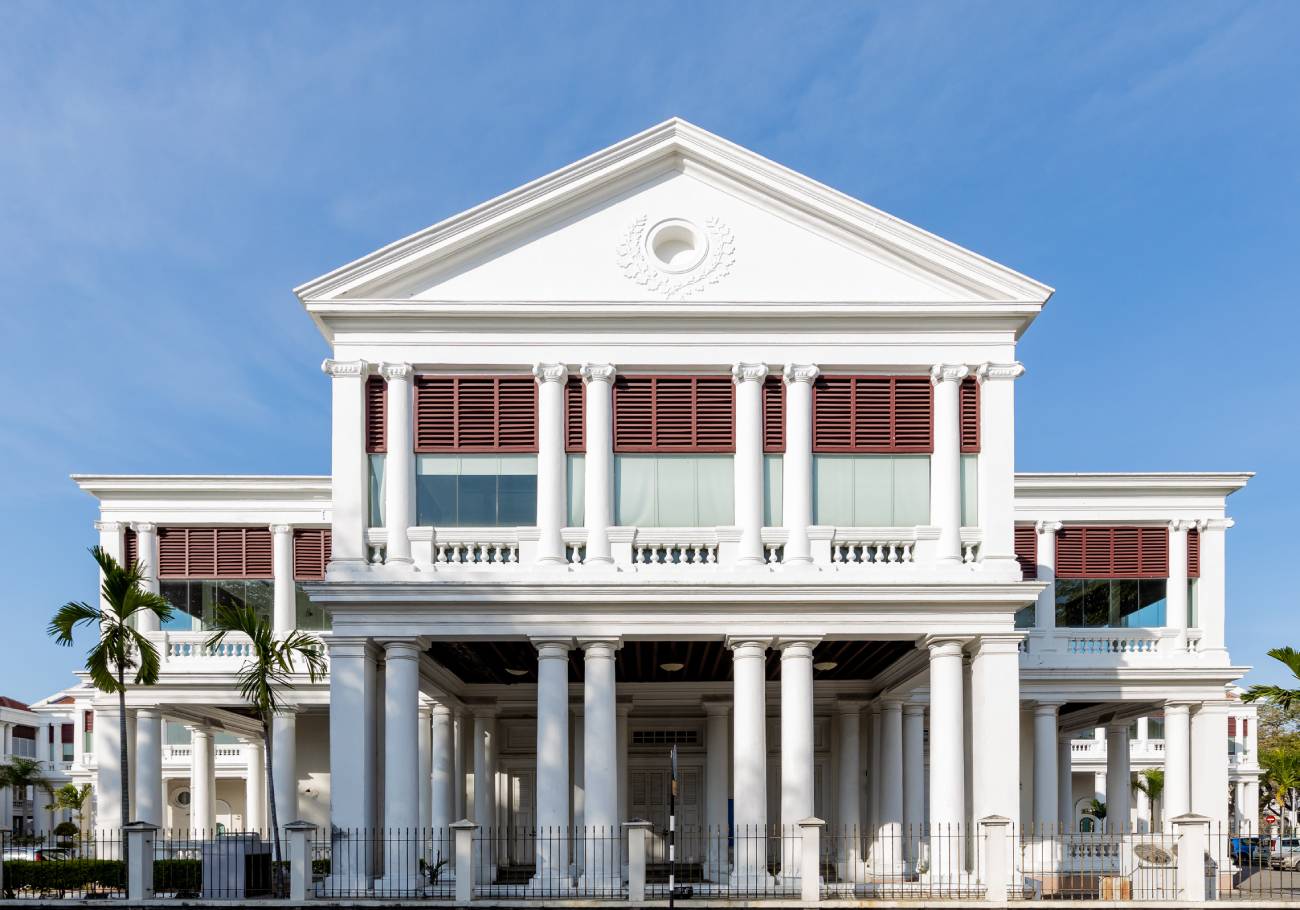
The Penang High Court dismissed the judicial review in July 2024. The court found the respondents had complied with the Town and Country Planning Act 1976. There was no illegality or unreasonableness in how the planning permission was granted.
But the case revealed something important.
Court affidavits showed that Islands B and C were merely shelved — not abandoned. The state had told the public those islands were off the table.
The court found that was not quite right. The fishermen and NGOs said they would appeal. As of June 2026, that appeal has not been heard.
Silicon Island is rising. The sand is there. The LRT depot handover is done. The Local Plan 2050 has been on public display. The state administrative centre is in planning.
The appeal is still pending. Islands B and C are shelved — not scrapped.
The RM1.1 trillion GDP promise is real. So is the fisherman catching half what he used to. Penang is still working out what kind of future it wants to build.




 C. Khor
 Sashidaran Gunathevan
 Admin
Admin



Add comment