


 Jimmy Tan
Malaysia’s Malaysian Fire and Rescue Department has formally redirected its operational focus to address a growing nationwide threat of fallen trees, as the country enters the inter-monsoon phase marked by unpredictable storms and strong winds.
Director-General Datuk Seri Nor Hisham Mohammad confirmed that fire stations across the country have been instructed to prioritise tree-related emergencies, which now average about 20 cases daily. The shift reflects a broader change in risk patterns, with open burning incidents declining by nearly 50 percent as wetter conditions return, while weather-induced hazards rise sharply.
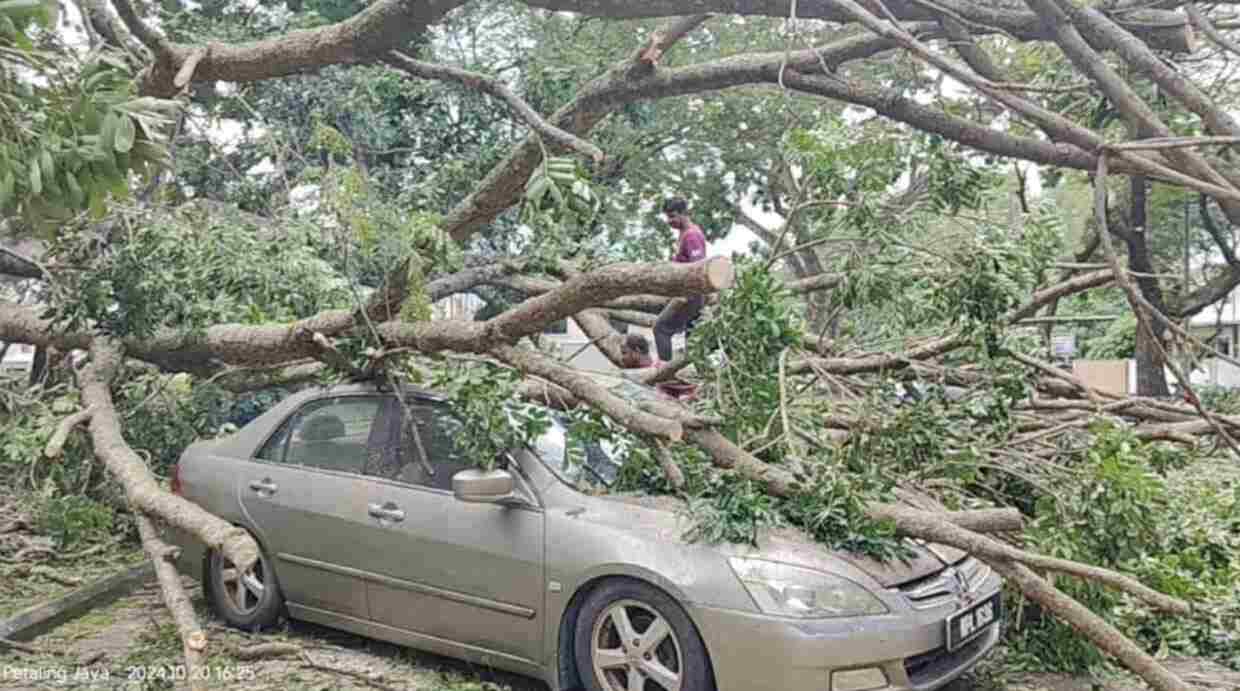
The department’s recalibration underscores how seasonal transitions are reshaping emergency response demands. Resources, manpower and equipment are being reallocated to handle fallen trees, blocked roads and related safety threats, particularly in urban and suburban areas where ageing trees and dense infrastructure heighten risks.
Safety concerns intensify after recent incidents
The renewed focus follows a series of serious incidents in April that highlighted the dangers posed by storm-damaged trees. On April 15, a 34-year-old landscaper in Kajang was fatally electrocuted while clearing debris that had concealed live electrical wires. Days later, in Selayang, a 44-year-old man narrowly escaped death when a large tree crushed his vehicle near the Forest Research Institute Malaysia, damaging four other cars.
The incidents have intensified scrutiny on local councils following a landmark Sessions Court ruling in March, which ordered Kuala Lumpur City Hall to compensate the family of a 2023 tree-fall victim. The decision established a clear statutory duty for authorities to ensure proper maintenance of urban trees.
In response, community leaders and safety advocates are calling for comprehensive Urban Forest Audits, urging councils to go beyond routine pruning and assess deeper structural risks such as soil instability and internal decay.
Pending longer-term measures, authorities are advising the public to adopt a strict zero-touch approach, maintaining a safe distance from fallen trees and leaving potential electrical hazards to trained personnel.


 Yalinie Mathan
 C. Khor






Add comment