


 Admin
AdminForty minutes before a date, the choice usually comes down to two options laid out on the bed, and the reasoning behind picking one is invisible even to the person doing it. The reasoning still runs. Researchers at Princeton found in 2006 that people form a judgment of a stranger’s face in about 100 milliseconds, and that longer looks mostly hardened the snap verdict instead of correcting it. Clothing is read inside that same window, before either person has said anything worth hearing.
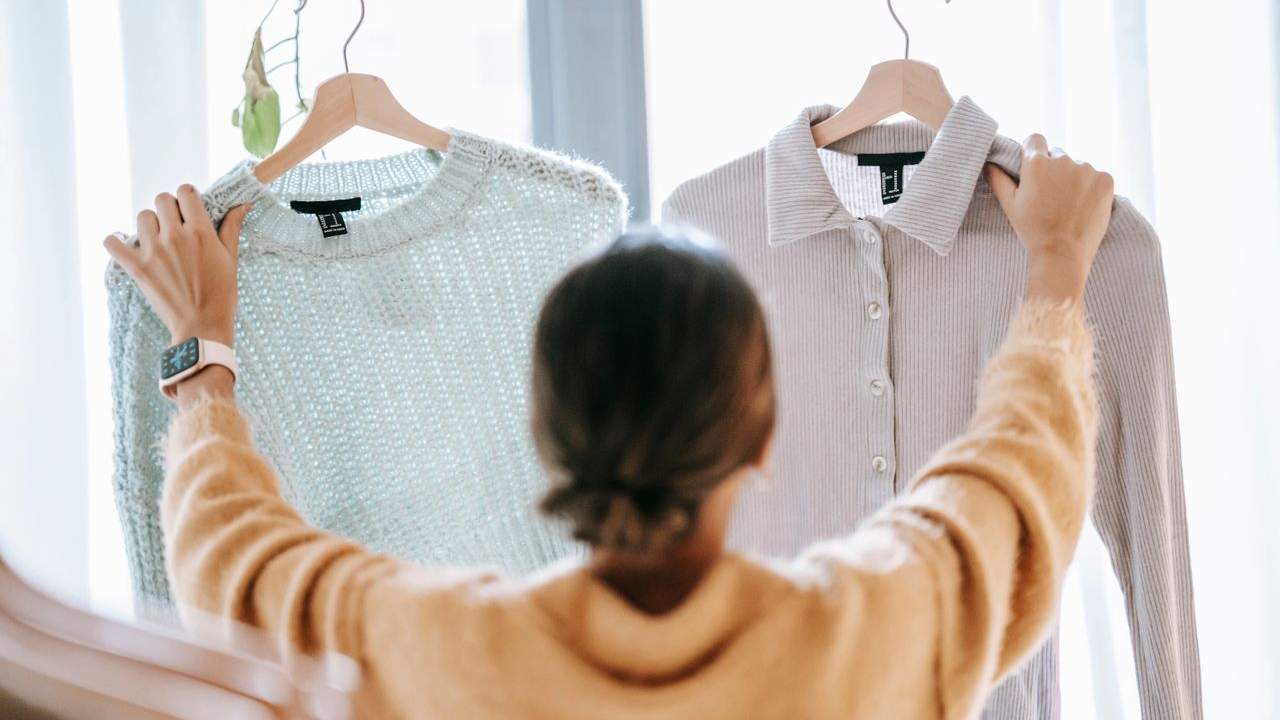
The 100-Millisecond Window
What comes through at that speed is coarse. Silhouette, color, how well the garment fits the body, and how much effort the whole thing suggests. Detail comes later, if at all. A necklace chosen with care is invisible from across a room, while a jacket cut two sizes too large is legible from the door.
That has one consequence for choosing an outfit. The strongest item should be the one visible at 20 feet, and everything else can stay quiet.
It also explains why so much date-night preparation goes to waste. Hours spent on eye makeup, nail color and the small hardware of an outfit are spent on details that arrive in the second minute of the meeting, long after the judgment has been made. The distance items set the frame that everything else gets read inside.
A Princeton team ran a study in which faces appeared in tops that observers had already rated as looking richer or poorer, and a separate group then rated the same faces for competence. The richer-looking clothing produced higher competence ratings every time. The result held when the faces flashed by too fast to study, when observers were told the person’s profession and income, when they were instructed to ignore the clothing, and when they were paid to make judgments independent of it.
Nobody in that study was consciously grading anyone on money, and the grading happened anyway. Fabric that holds its shape, hems that end where they should and shoes that have been maintained account for most of that impression. Condition is a stronger signal than price, which is good news for anyone building an outfit out of what is already in the closet.
Outfit Choices and the Intended Audience
Different men notice different details. Somebody who spends his week in tailoring sees a hem and a shoe before he sees a color, while a man from a creative field reads it the other way around. An evening with a high-value man usually calls for the first kind of dressing, where fit and upkeep matter most.
None of this requires becoming somebody else for a night, only knowing which details the person across the table has been trained to notice.
The Red Effect
The best-known finding in this area, the red dress effect, is also the shakiest. In 2008, Andrew Elliot and Daniela Niesta ran five experiments in which men rated the same women as more attractive and more desirable when the photograph included red, in the shirt or in the frame around it. The men had no idea color had anything to do with their ratings.
Then the replications arrived. A 2016 study with a larger sample found no effect of red on mate preferences at all, and later reviews of the pooled evidence put the effect far below what the original numbers suggested. Red is a small edge at best.
The color is the least interesting part of that research. Men in those studies could not name the thing that moved their ratings, which is true of most of what an outfit does. Nobody at the table will say the linen was doing something. He will say the evening felt easy. Choosing a color because it flatters a complexion is a better rule than choosing one because a headline once promised it worked.
The Venue Rule
Most outfit failures on a date are venue failures. A dress that is right for a hotel bar is wrong at a brewery, and the mismatch is what the other person notices, ahead of the dress itself. Ask where the date is, then dress one step above the room’s floor.
That step matters because the two errors cost different amounts. Someone slightly overdressed looks like she made an effort for the occasion. Someone underdressed for a formal room spends the evening aware of it, which shows in posture and in how often she looks around to check.
The venue also tells you what the outfit has to withstand. A walking date needs shoes that hold up on pavement for two hours. A restaurant with low banquettes rules out anything that has to be pulled down on standing. An outdoor bar in October decides the question of a coat, since a woman who spends the night cold will remember the cold and not much of him.
For an ambiguous plan with no venue attached, smart casual is the setting to default to. A fitted dark trouser or a knee-length dress with a structured layer over it holds up through a change of scene when the evening moves somewhere else, and it never announces that the wearer guessed wrong.
Enclothed Cognition and Self-Perception
Clothing also acts on the person wearing it, an idea researchers named enclothed cognition. Hajo Adam and Adam Galinsky gave students white lab coats and ran them through the Stroop test in 2012. The students in coats made half as many errors on the critical trials as the students without them, and the effect required both parts, the symbolic meaning attached to the coat and the physical act of wearing it. Students who only looked at a coat on the desk showed nothing. A 2019 replication failed to reproduce the difference, so the size of all this is still open.
The dating version is straightforward, and it holds whichever way the argument about how much clothes influence performance eventually settles. An outfit associated with poise tends to produce a little poise, and an outfit that has to be adjusted every ten minutes produces the opposite. This is the argument against wearing something brand new. Unfamiliar clothes get touched and tugged all evening, and across the table that fidgeting looks like nerves about the company when the cause is a waistband.
The Test to Run Before Leaving
Put the outfit on an hour early and sit in it. Sit the way you will sit at dinner, on a hard chair, for ten minutes, and count how many times a hand goes to a strap or a hem. More than twice means the outfit will occupy attention all night that belongs somewhere else.
Then step back and look at the outfit from across the room, because that is the distance at which he will first see it. If it holds up from there, wear it and stop thinking about it.


 Yalinie Mathan
 C. Khor







Add comment