


 C. Khor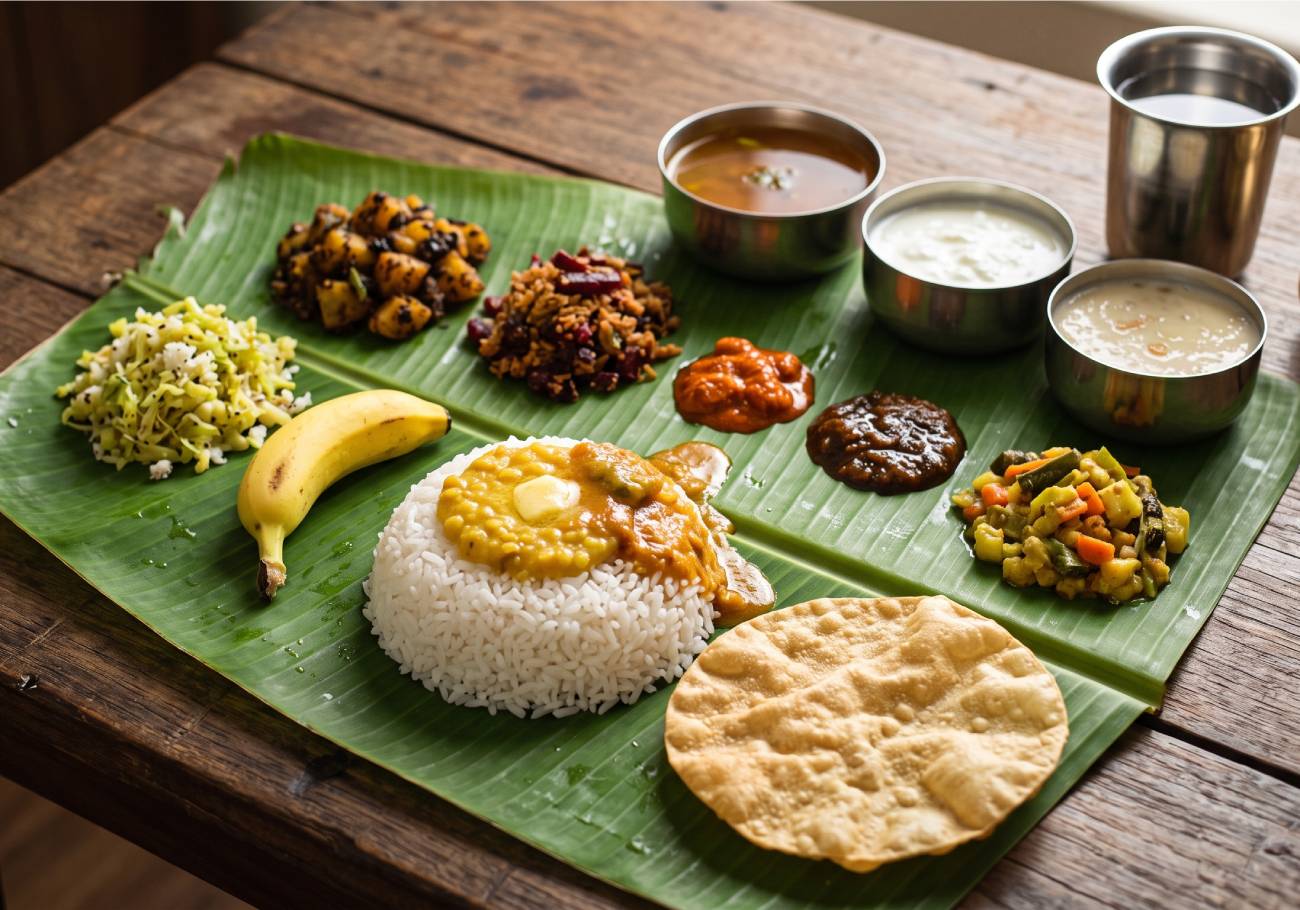
A banana leaf meal once cost as little as RM1.20 in Penang, and a hungry worker could eat his fill. Today, the same leaf can mean a quick lunch or a full dining experience.
Datuk P. Murugiah, chairman of the Penang Hindu Association, remembers the early 1970s. His pay was RM75 then, and a roti canai cost 10 sen, he told Khor.
Here is how prices have changed, how the meal is eaten, and where the tradition stands in George Town today.
What the meal cost then and now
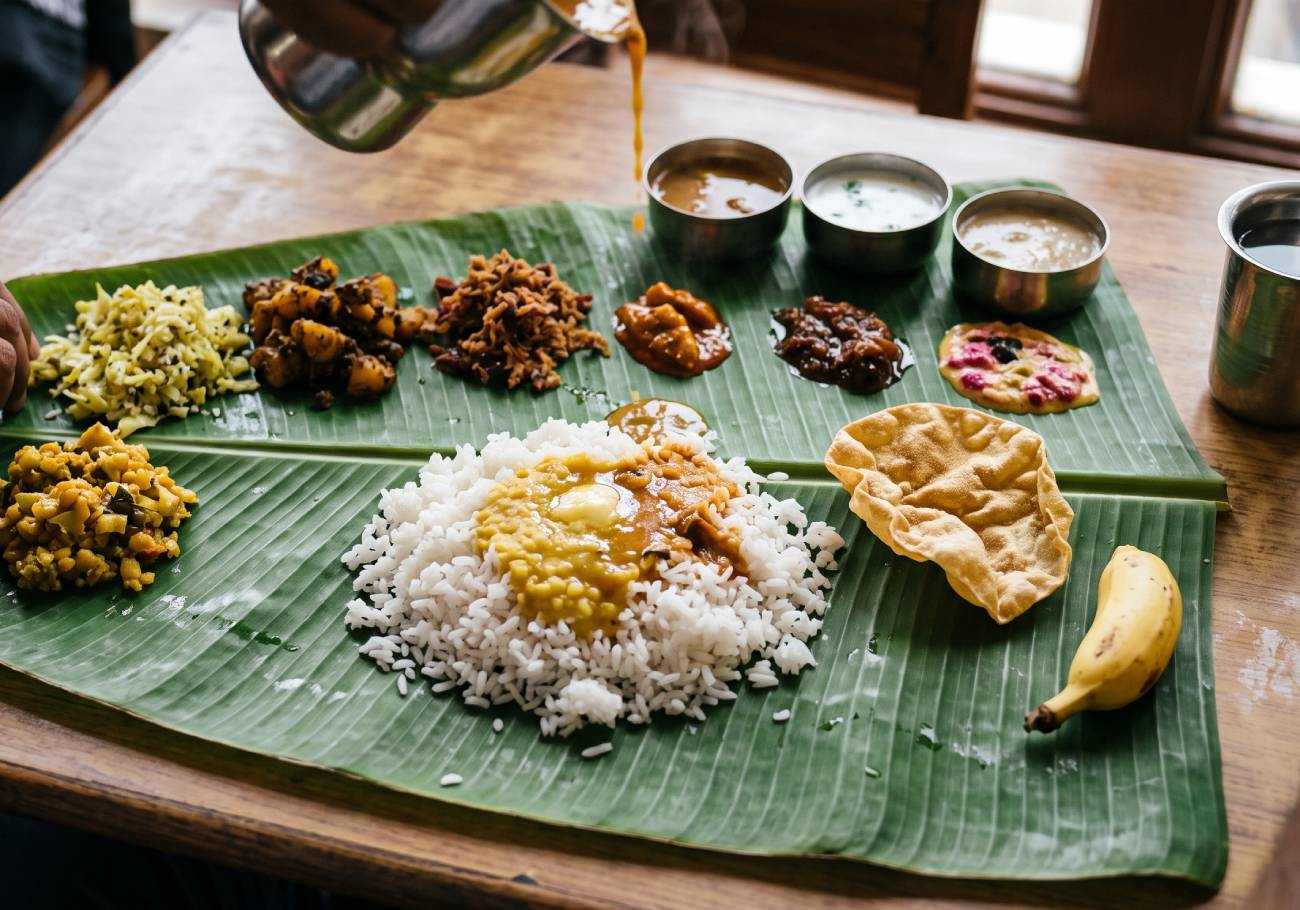
Murugiah said vegetarian meals cost as little as RM1.20. Non-vegetarian meals ranged from RM1.80 to RM2.50.
The price let him skip breakfast and make lunch his main meal. He often took three or four helpings. Rice and accompaniments could be topped up, and rasam could be refilled as often as a diner liked.
He traced banana leaf dining in Penang to Indian labourers, especially port, construction and general workers. Their work ran through the night. Around 11.30am or noon, they headed to the Indian eateries.
“At one time, banana leaf was a poor man’s food,” he said. “Today, the pricing at some places is closer to fine dining.”
He said some places still charge RM12 to RM15 a set, with free flow rice, vegetables and rasam. In hotels, he said, a meal with unlimited top-ups can cost around RM98 to RM100.
The leaf itself has become dearer. Murugiah said a leaf that once cost 10 sen now costs 50 or 60 sen, more than a plate. Even at Thaipusam, not every stall now serves food on one.
How the Banana leaf meal is eaten
A South Indian thali meal traditionally covers six tastes: sweet, salty, sour, bitter, pungent and astringent. Rice, dhal, vegetables, curries, pickles, chutneys, papadum, curd and rasam together deliver them.
Diners can then add fish, mutton or other dishes. Murugiah said the papadum is a favourite, especially among non-Indians. Biryani rice, being dearer, was typically not served on a leaf.
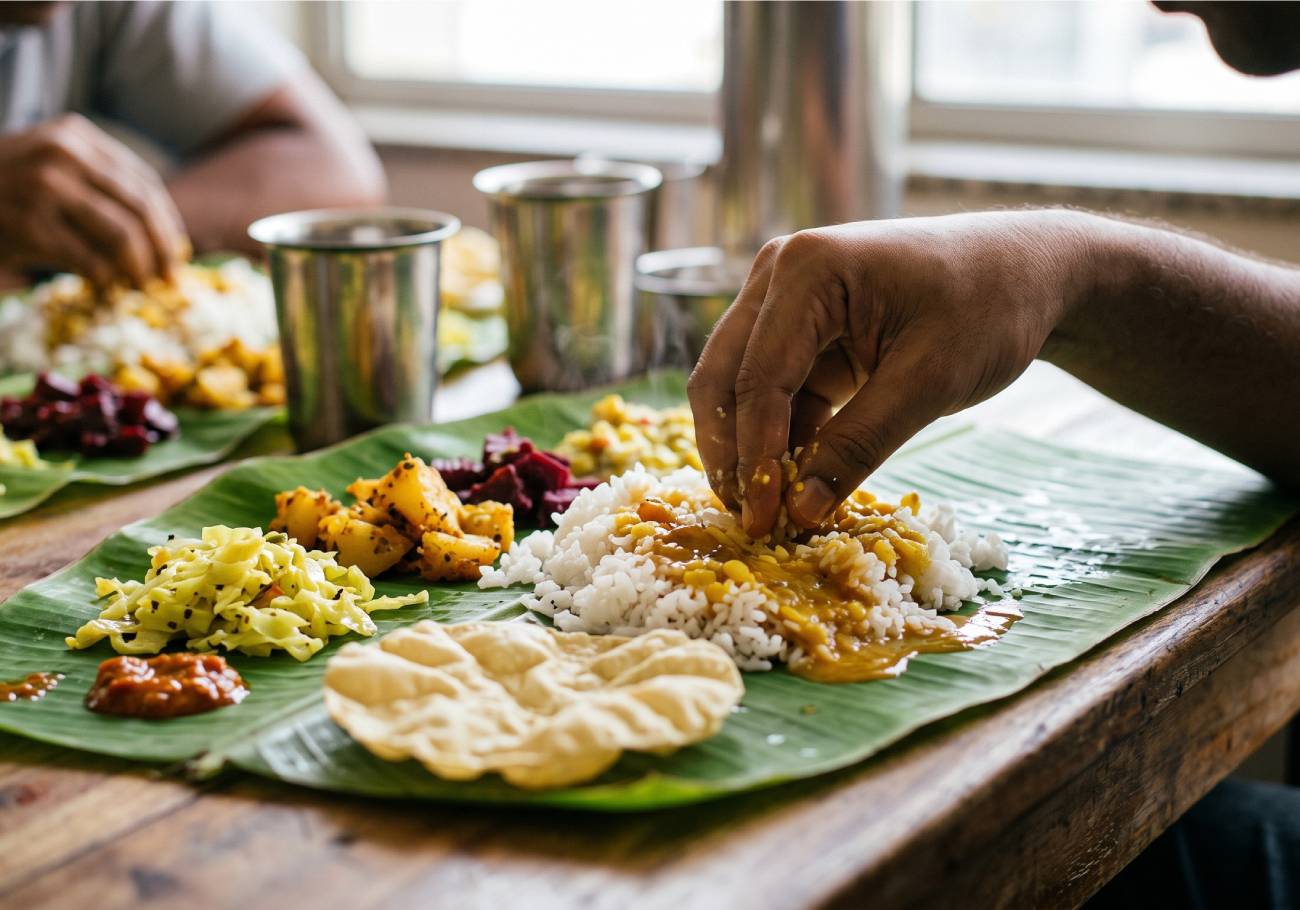
Food goes straight onto the leaf, and diners eat with the right hand. They mix the rice with dhal, vegetables and gravies to taste. The meal often runs from rice and dhal to curry, then curd, and finally rasam.
Murugiah said rasam aids digestion. During Covid-19, he said, many Indians drank it to try to ward off the virus. He credited the medicinal value of its spices.
Etiquette also applies. After the meal, diners fold the leaf towards themselves to show satisfaction. Folding it away traditionally signals a funeral.
The leaf also appears beyond lunch. Cooks also put thosai and idli on it at breakfast and dinner, and it features at weddings and festivals. Murugiah said it follows the community from birth to death, including the 30th-day funeral prayers.
From Veloo Villas to Rempah Ratus
One name woven into Penang’s history is Veloo Villas, which opened in 1959 at 22 and 24 Lebuh Penang. A 2012 directory of traditional trades in the George Town World Heritage Site lists it as a banana leaf restaurant.
Murugiah remembered Veloo Villas and Krishna Villas as “topless restaurants”. The cooks came from India and worked in dhotis, without shirts or slippers. They served diners after they finished cooking.
He said lawyers and doctors alike used the nickname. In those days, he said, nobody cared whether the cooks wore shirts.
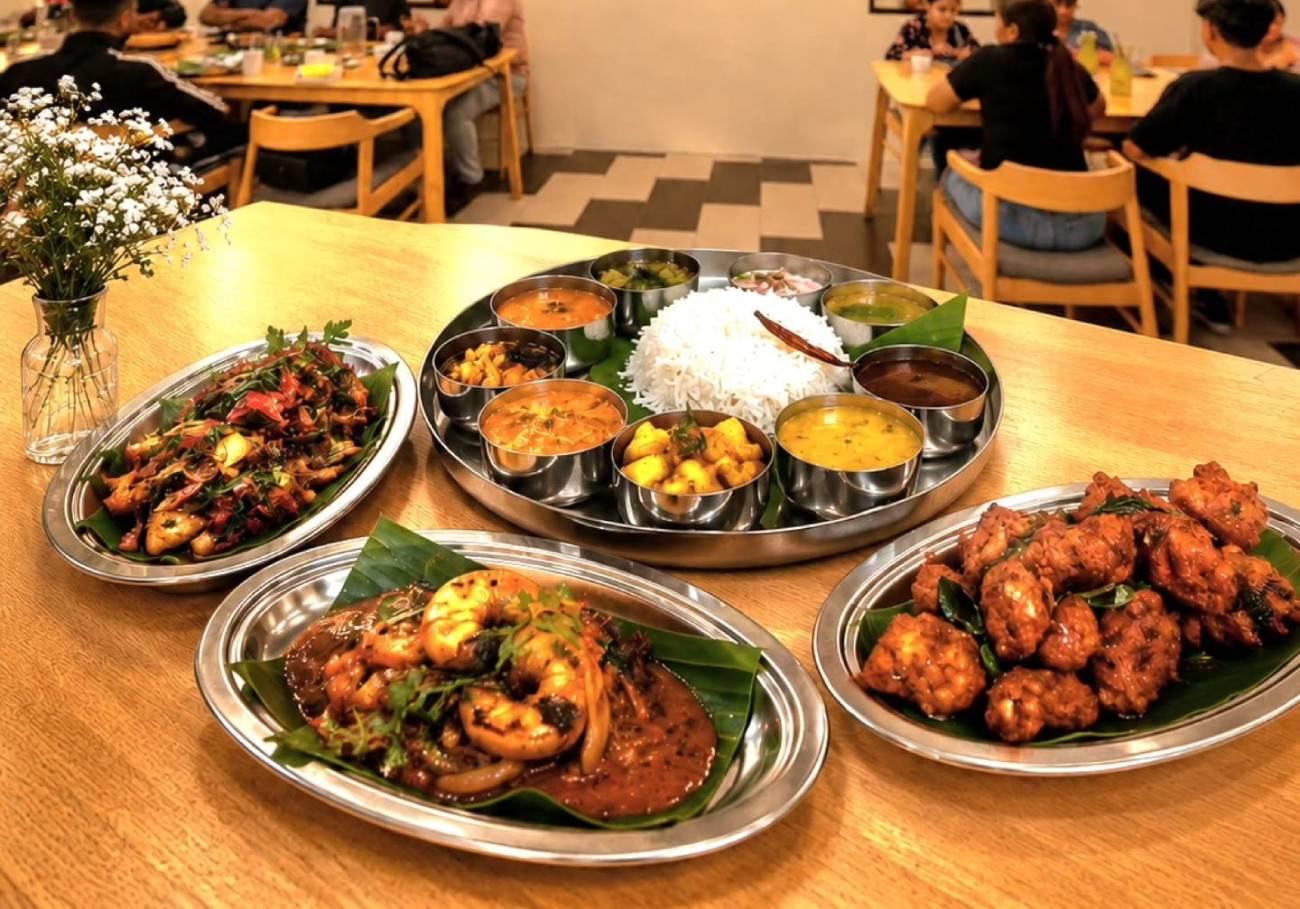
Today, the two shoplots house Rempah Ratus Banana Leaf Cafe. It opened in mid-2023 at Jalan Nagore and moved to Lebuh Penang in January under new management. Manager Francis Anthony said the owners are local and the restaurant is halal-certified.
Its vegetarian thali costs RM14.90. It comes with three vegetables, three curries, papadam, raita and basmati rice. Francis said the shop does not serve parboiled rice.
Feasts on a single leaf cost RM45.90 for two with chicken and RM59.90 with mutton. The four-person portions cost RM85.90 and RM97.90. Extra rice costs RM4.50 and rasam RM1.
Francis said free flow is “no longer feasible in this current market of inflation”. The cafe once served the leaf on a steel plate, but now uses the leaf alone.
The cafe shuts on Wednesdays and opens from 11am to 10pm on other days. The meal may no longer cost RM1.20, but the leaf remains.


 Yalinie Mathan

 Admin
Admin




Add comment