


 Admin
AdminA multidisciplinary student team from Asia Pacific University of Technology & Innovation (APU) has received the Best Creativity Award at the Southeast Asia Regional Finals of the 9th Global Competition on Design for Futures (GCD4F) 2026 for an artificial intelligence-powered approach to urban air pollution.
Team Eco Raya, comprising students from Mechatronic Engineering, Information Technology and Industrial Design, presented “Eco Raya: An AI-Powered Urban Air Purification & Bio-Filtration Tower for Cities”.
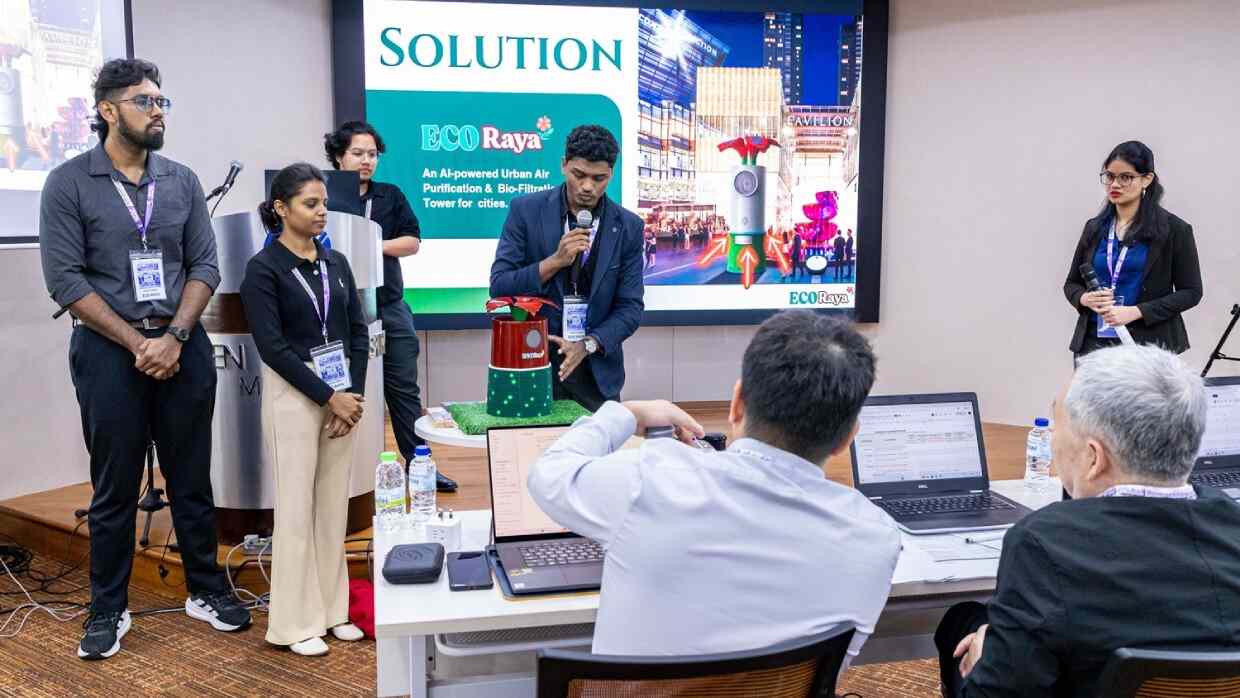
The team competed against 17 teams from Malaysia, China and Vietnam at the regional finals, held from July 20 to 21 at Menara Open University Malaysia in Kelana Jaya.
Its proposed tower combines AI-powered environmental monitoring with bio-filtration, using real-time environmental data and AI-driven analytics to monitor air quality, identify pollution patterns and provide information for more proactive environmental management.
The team members are Thiriidev Kumar Murlidaran, Gregory Raven Andrew Selian and Muhammad Hassan Bin Mohd Nasir from Mechatronic Engineering; Sarah Manisha Oorjitham from Information Technology, specialising in Software Engineering; and Industrial Design student Krithika Sree Devi.
From campus project to regional competition
The project originated at the APU Sustainability Hackathon, where students developed technology-based concepts aligned with sustainability goals. Through research and refinement, Eco Raya developed into a multidisciplinary proposal incorporating engineering, software, environmental considerations and user-centred design.
The regional competition was co-hosted by Open University Malaysia, Beijing Normal University and the UNESCO Institute for Information Technologies in Education. It focused on future-oriented AI solutions under the themes of AI for Science, Education and Society.
The team received an RM200 cash prize alongside the Best Creativity Award.
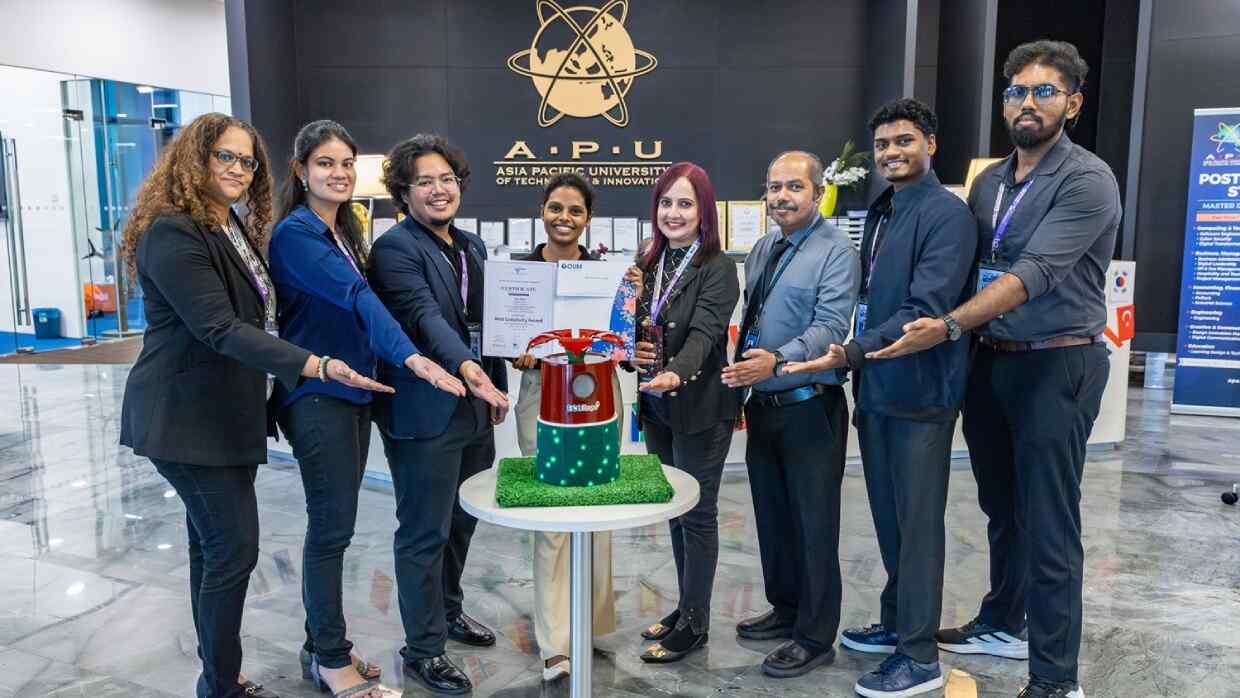
Eco Raya was mentored by Ts Suresh Gobee, Ms Harjinder Kaur and Ts T. Tulasi Sathyabama Appalasamy, with additional guidance from experts from MIMOS Academy, Beijing Normal University and Open University Malaysia.
APU Vice-Chancellor Professor Dr Ho Chin Kuan said the project demonstrated how AI could be applied beyond automation and prediction.
“Eco Raya shows how AI can move beyond automation and prediction to become an enabler of sustainable, human-centred solutions,” he said.
He added that combining AI with engineering, design and environmental awareness could help students develop technology-oriented solutions focused on practical societal needs.





Add comment